



 73 / 148

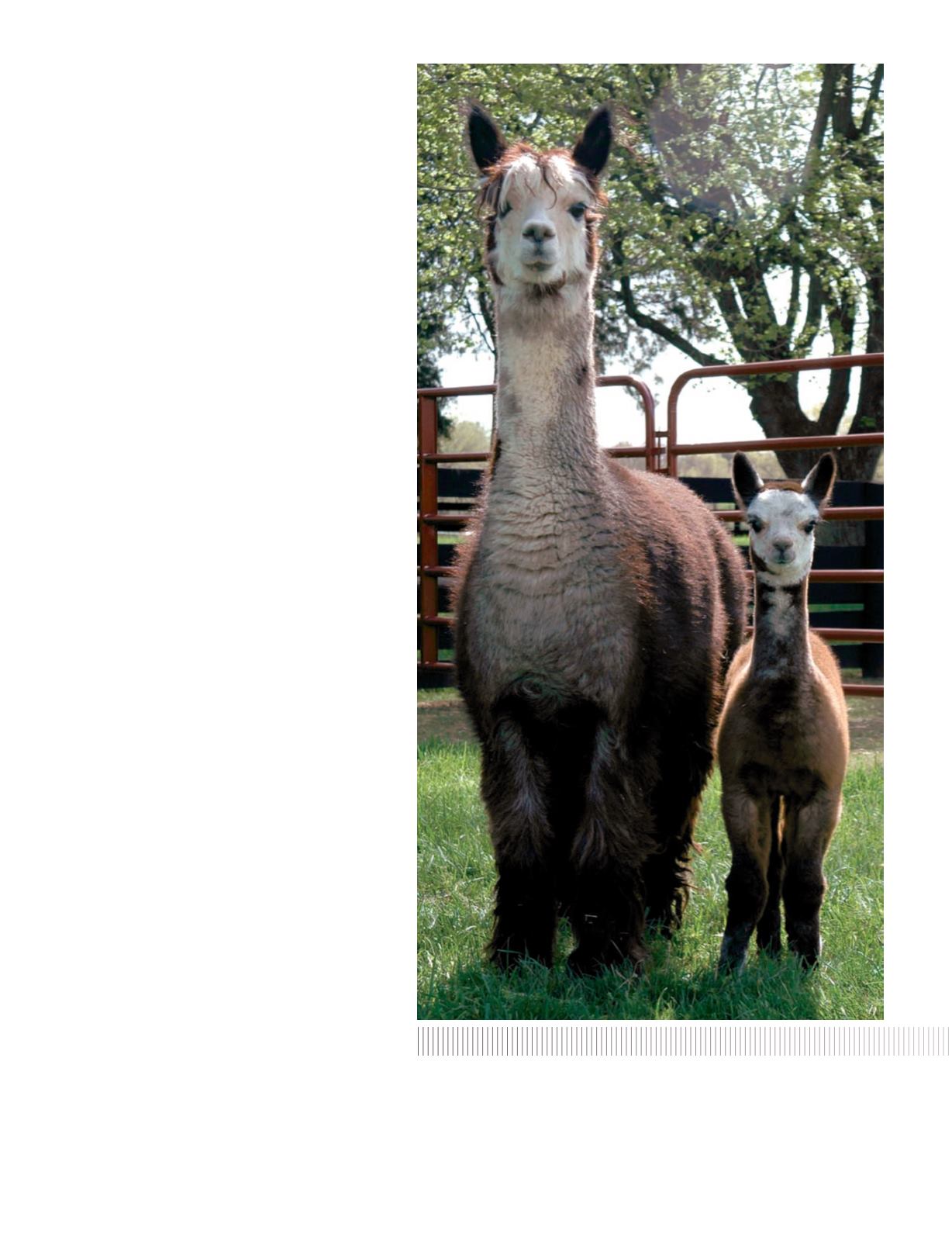
The range of expressivity means that some
animals that are genetically gray, may not end up
characterized as gray, or meet the AOBA show
definitions of gray. Very light animals that are
grayed can be harder to detect as well. The fawn-
looking cria in the upper right corner of the
Variable Expressivity figure above is likely a poorly-
expressed light rose gray, just as his mother (in the
middle) is a poorly-expressed, very dark silver gray.
She showed in black and even took second place at
the AOBA nationals as a black juvenile many years
ago, but had grayed down the neck and into the
blanket by one year of age and is now much more
obviously a gray rather than a black as AOBA
color-checked her.
Bred to solid four times, Pistol, the dam in the
middle of the figure, made two obvious grays with
white markings, one fawn and one that is likely a
poorly-expressed light rose gray. The upper right
male had a light forelock and dark back of the head
and dark fibers throughout the fleece. He showed in
light fawn a number of times and indefinite a few
times. We will see what he produces in a year or
two. I predict 50% grays bred to solid non-whites.
Dark-Headed Roan Grays
I believe this is caused by a different gene than the
classic grays. It seems to behave as a recessive, as
most dark-headed roans have NO ROAN PAR-
ENTS. This is the classic sign of a recessive trait.
For dominant traits, if you have the allele, you
have the trait. Clearly, this is not the case for
dark-headed roans. Breeding two dark-headed
roans together should always yield more dark-
headed roans (if it is a simple recessive trait).
So far, I have seen no outcomes from such a
breeding, but a number have been undertaken,
so 2010 should yield some data. This also means
that Dark-Headed Roans rarely reproduce their
phenotype, and the registry backs this up, with
very few gray crias out of dark-headed roans,
unless they were bred to classic grays. Any animal
can make gray bred to classic gray. However, if
you can identify carriers of the roan allele and
breed them to roan grays, they should make roan
grays 50% of the time. Carriers would be any
non-gray animal that made a dark-headed roan
gray cria and any cria of dark-headed roans.
Possible carriers would be siblings of dark-headed
roans. Dark-headed roans have no white on them
typically, and are thus not a risk for making
BEWs. They also lack the dark spotting typical
of both classic grays and harlequin grays.
Spring 2010
73
Silver Grays and Rose Grays are both part of the Classic or Tuxedo phenotype.
© 2009 Jennifer Clark