



 72 / 148

72
Alpacas
Magazine
Blue-Eyed Whites and Grays
Blue-eyed white alpacas (BEWs) are often deaf,
and are created by breeding two animals together
that have white markings at the extremities. This
can include classic grays bred to non-gray animals
with white markings. Such breedings will yield
BEWs 25% of the time. It also means that some
BEWs can actually make gray cria if they are bred
to solid, non-white mates. Indeed, these BEWs
out of classic grays should make classic grays
50% of the time (on average) and white marked
animals the other 50% of the time.
Expressivity of Classic Gray Features
Expressivity refers to the level of expression of
a trait. For grays, the level of expressivity varies
wildly for the three traits that make up a classic
gray: the amount of gray on the animal, the
amount of white on the animal, and the number
and size of dark spots on the animal. The first
two are linked together, in that the white markings
are created by incomplete migration of the
melanocytes in the embryo. The melanocytes
migrate from the core outward and wherever
they do not reach is white, and wherever they
reach is pigmented. That is why white markings
are at the extremities. If the pigment migrates from
the body core to half-way down the legs, you have
white feet and stockings. If it does not migrate all
the way up the neck, you get a white head, etc.
Therefore, the amount of gray and the amount
of white can be caused by the same phenomenon
(migration of melanocytes during embryogenesis).
Several genes are involved in melanocyte migration
and these are candidate genes for the white spot
locus. There are grays with only a white mask, and
grays with the full-blown tuxedo look, but they are
both the same thing. They are just variations in
how far the pigment migrated.
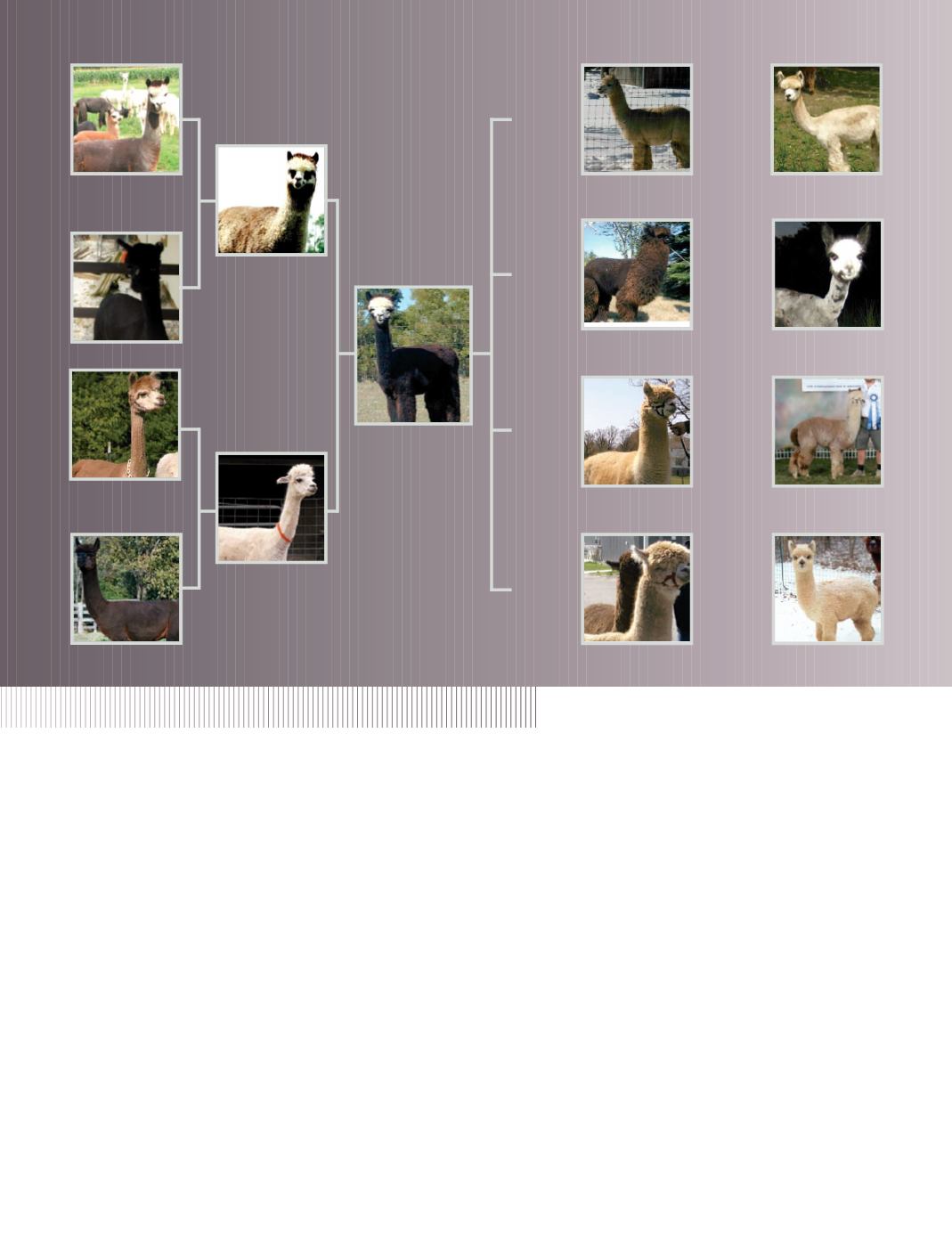
Variable Expressivity through four generations.
+
+
+
+
+
Photos in chart provided by the author.
+
+