




 110 / 148

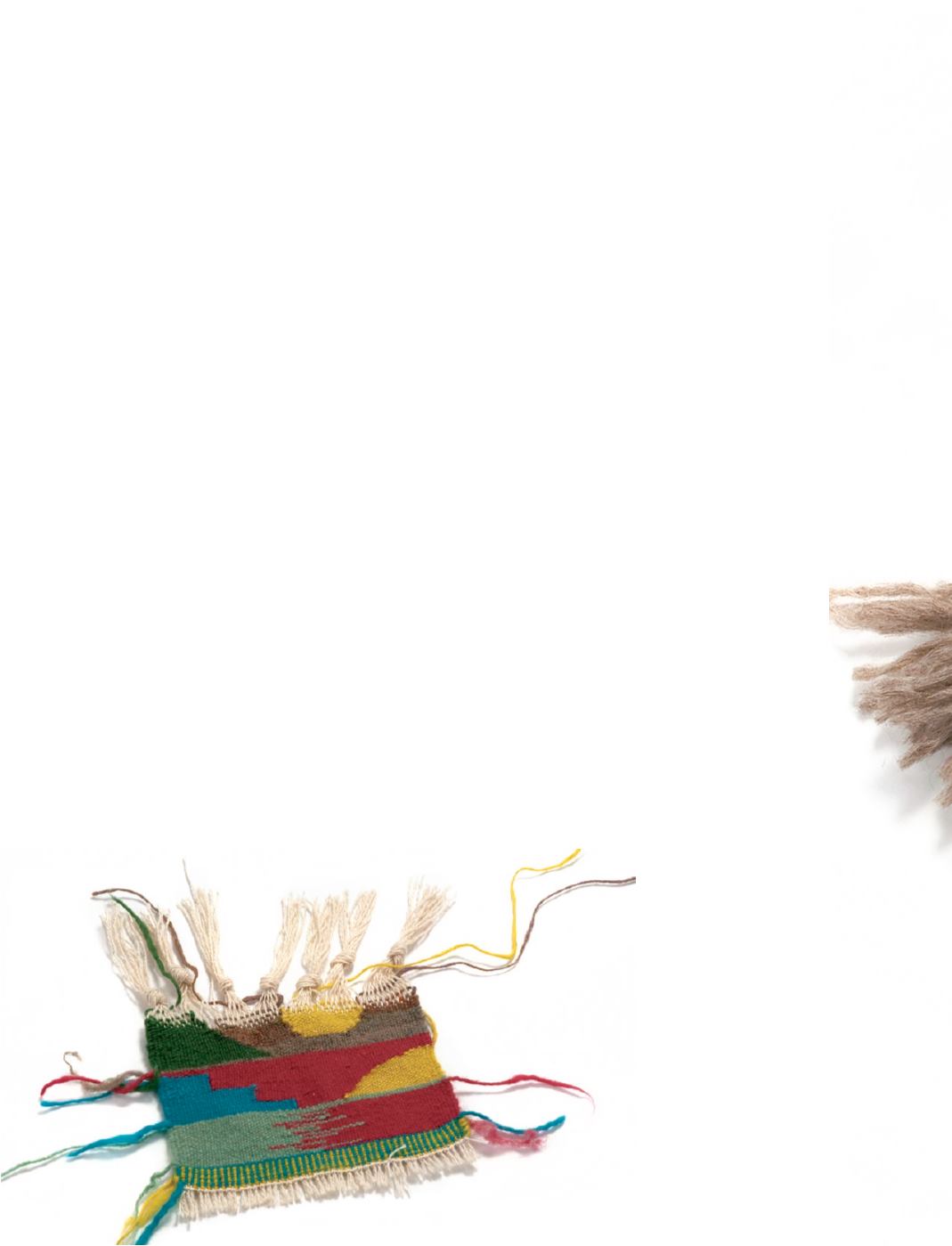
tapestry weaving
on a floor loom
by Lynette Ausland Eads
110
Alpacas
Magazine
The word
tapestry
comes from the Latin word “tapesium.” Tapestries
were used in Greek and Roman times as a covering for furniture, floors,
curtains, and walls. Tapestry is a process that is “hands on” and very
different from the traditional ways of weaving by passing a shuttle back
and forth, and beating your weaving with your
beater.
The control of
weaving is in your hands. A regular shuttle is not used for most of the
tapestry. “Butterflies,” which are segments of yarn wound around your
fingers in a figure-8 are used, instead. The pattern in the tapestry is
formed with weft yarns, creating the design by using several techniques.
The warp must be strong enough to support the structure of the
weaving and to withstand the beating of the weft yarns.
Tapestry weaving was done between the 3rd and 7th centuries
by the Christian Copts in Egypt, under the Byzantine rule. These were
often referred to as “Coptic Tapestry.” These tapestries were woven
with a linen warp and fine wool weft, creating pictures of humans,
birds, and many geometric designs. The techniques we refer to as
tapestry techniques
today involve many ways of interlocking the weft
threads. Many types of tapestries came to Europe through trading with
other nations. During
the Middle Ages,
weavers created large
tapestries as floor and
wall coverings to help
keep the warmth
in the large
cathedrals and
castles being built
at that time.
weaving wisdom