




 85 / 148

Farmers were able to continue using
their cooperatives to jointly market
their agricultural commodities without
risk of Federal and state legal penalty.
Agricultural cooperatives became very
important to and widely used by farmers.
The Federal government recognized
this and included cooperatives in its
national farm policy with the passage
of the 1926 Cooperative Marketing
Act. This Act directed the formation
of a Division of Cooperative Marketing
within the U.S. Department of
Agriculture.
This promoting and serving farmer
cooperatives initiative is now the
Cooperatives Program of USDA Rural
Development
(www.rurdev.usda.gov/rbs/coops/csdir.htm). Its website states:
“The mission of Cooperative Services
Program is to promote understanding
and use of the cooperative form of
business as a viable organizational
option for marketing and distributing
agricultural products.”
Congress also gave cooperatives
preferential tax treatment with Section
521 and Subchapter T of the Internal
Revenue Code. The Code, however,
makes these provisions only available
to organizations operating on a cooper-
ative basis.
American business entities are set
up under state law. States have laws
providing for the formation of coopera-
tive corporations along with regular
corporations, partnerships, non-profits
and limited liability companies.
Customarily, farmer cooperatives are set
up under the cooperative corporation
laws of a particular state.
The U.S. Department of Agriculture
(USDA) reports over 3,300 farmer
cooperatives exist, with nearly $100
billion in combined annual gross busi-
ness volume. Some of the more familiar
cooperatives are: Ocean Spray cranberry
juice, Sun-Maid raisins, and Florida’s
Natural orange juice.
A
lpaca farmers also produce an
agricultural commodity – fiber.
It, too, can be made into consumer
products. Fiber can contribute signifi-
cantly to farm income. The cooperative
business model marketing efficiency
can maximize this fiber income.
The cooperative business model has
six major hallmarks that make this
possible.
Market Power –
Farmers working
together remove price and output com-
Spring 2010
85
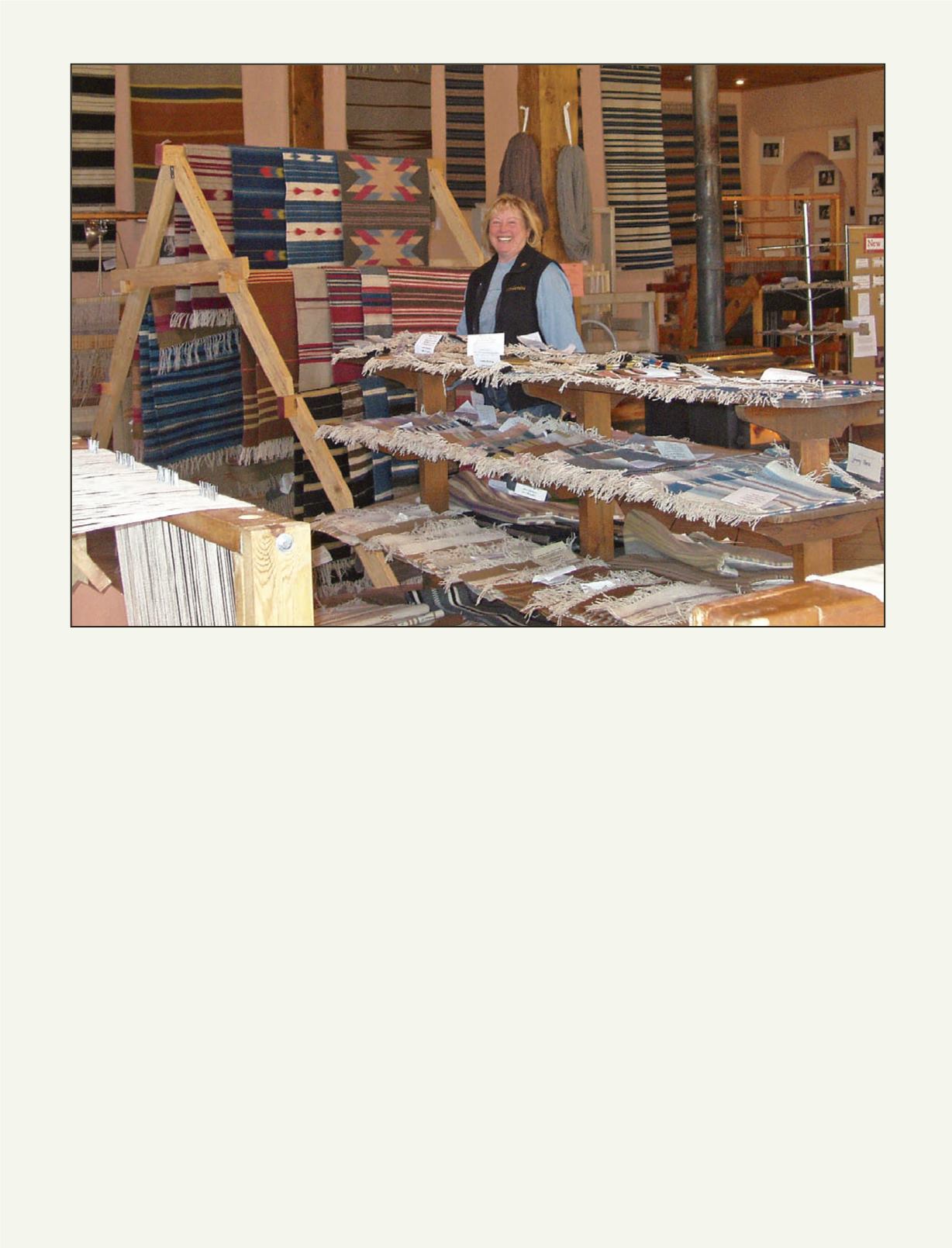
Friendly staff at Tapetes de Lana will help guide you through the AFCNA
submission program, from fleece submission to purchase of end product.