



 10 / 148


f
ejups
gspn!uif
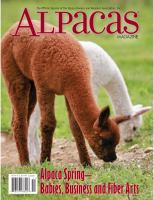
It’s cria season! Yes, it is also shearing season and
show season, but for alpaca farms with breed-
ing stock, I don’t think anything can match the
excitement with which we anticipate the arrival
of new babies.
Perhaps someday breeding science will be so
precise that we will know exactly when each dam
will go into labor, what sex the baby will be, and
what color. While knowing some of this informa-
tion would make our lives as alpaca ranchers
easier (for example, having an accurate and exact
due date would revolutionize baby watch!), I fear
knowing all the results in advance might take
some of the fun out of the birthing season.
It’s the element of surprise that makes the
process so compelling. When pairing up males
and females, most of us have in mind a desired
outcome. Part of the joy of baby season is finding
out how close we came to that vision. It’s safe
to say that there is plenty of mystery left in
the process.
On the other hand, for those things we can
control, I think the writers contributing to this
issue have done a grand job of providing us with
new ideas to mull over as we wait (and wait!) for
crias to arrive.
Dr. Lisa Pearson offers helpful guidelines for
breeding management while Dr. Pat Long dis-
cusses care for the overdue female. Breeder
Nancy Carr remembers a year of unusual births.
Compare her description of the variety of situa-
tions she dealt with in just one birthing season
with our photo-essay of the normal birthing proc-
ess. To top off our look at birthing season, Sheila
Scroggins has worked up an interesting compari-
son of milk replacement products.
Also under the heading of health and manage-
ment, and as we head into the summer months,
Dr. Norm Evans has written a very timely remind-
er of the importance of preventing and diagnos-
ing heat stress in alpacas. Alpaca breeder Wanda
Hildebrant discusses the problem of contracted
tendons in very young crias and breeder Michael
Morrack tells of his experience ridding his herd
of chorioptic mites, a problem that is much more
common among alpaca herds than we like to
admit. Marty McGee offers ideas for reducing
stress among alpacas, which might also serve
to reduce their owners’ stress at the same time.
Since this is also shearing season, we have
not forgotten the fiber side of alpaca life. Alpaca
breeders Linda Batt and Laura Coussens provide
two different tools for assessing fiber attributes
—a three-dimensional view and an analysis of
histograms. Dr. Gwendoyn Hustvedt shares the
results of her studies on consumer preferences,
comparing organic versus sustainable labeling for
alpaca socks.
To help your business grow, we’ve invited
nationally-known professional photographer
Jennifer Clark to teach us the secrets of photo-
graphing products made from alpaca. Now your
marketing pictures will look as beautiful as the
garments do. Teresa Ehalt’s case study tells how
she and her husband turned a historic home into
an alpaca B&B, and marketing expert Julie Was-
som counsels us on avoiding (or fixing) market-
ing mistakes.
Of course, no issue would be complete without
fiber arts and crafts projects. This time we’ve
rounded up a variety of projects, large and small,
to keep your hands busy while you wait for those
new babies to show up.
Here’s to many hours of enjoyment with the
Spring 2012 issue, whether in your favorite read-
ing chair, watching crias play in the fields, or in
the craft room.
Deb Hill
|
Editor
Correction
/Ŷ ƚŚĞ ^ƉƌŝŶŐ ϮϬϭϭ ŝƐƐƵĞ ŽĨ
ůƉĂĐĂƐ DĂŐĂnjŝŶĞ
͕ ŝŶ ĂŶ ĂƌƟĐůĞ
ƟƚůĞĚ ͞dŚĞ 'ƌĂŝŶ ŝůĞŵŵĂ͕͟ ĂƵƚŚŽƌ >ĂƌŬ ƵƌŶŚĂŵ͕ WŚ ͕
ǁƌŽƚĞ͗ ͞&ŽƵŶĚĞƌ ŝƐ Ă ŵĞƚĂďŽůŝĐ ĚŝƐĞĂƐĞ ŝŶŝƟĂƚĞĚ ďLJ ĂŶ ŽǀĞƌĚŽƐĞ
ŽĨ ƌĂƉŝĚůLJͲĨĞƌŵĞŶƟŶŐ ĐĂƌLJĚƌĂƚĞƐ͕ ŝŶĐůƵĚŝŶŐ ŐƌĂŝŶ͙͟
ƌ͘ ƵƌŶŚĂŵ ŚĂƐ ƐŝŶĐĞ ůĞĂƌŶĞĚ ƚŚĂƚ ĂůƉĂĐĂƐ ĚŽ ŶŽƚ ŐĞƚ ĨŽƵŶĚĞƌ͕
ǁŚŝĐŚ ŝƐ Ă ĚŝƐĞĂƐĞ ŽĨ ŚŽŽĨĞĚ ĂŶŝŵĂůƐ͘
ůƉĂĐĂƐ DĂŐĂnjŝŶĞ
ƌĞŐƌĞƚƐ
ƚŚĞ ĞƌƌŽƌ͘ >ĂƌŬ ƵƌŶŚĂŵ ƌĞĐĞŝǀĞĚ Ă WŚ ŝŶ ŶŝŵĂů ^ĐŝĞŶĐĞ ǁŝƚŚ
ĂŶ ĞŵƉŚĂƐŝƐ ŝŶ ZƵŵŝŶĂŶƚ EƵƚƌŝƟŽŶ ĨƌŽŵ dĞdžĂƐ dĞĐŚ hŶŝǀĞƌƐŝƚLJ
ŝŶ ϮϬϬϰ͘ ^ŚĞ ĐĂŶ ďĞ ƌĞĂĐŚĞĚ Ăƚ ůĂƌŬΛŶĂƚƵƌƐͲǁĂLJ͘ĐŽŵ͘
10
|
ALPACAS
MAGAZINE