Pasture Planning and Forage Management for Alpacas and Llamas
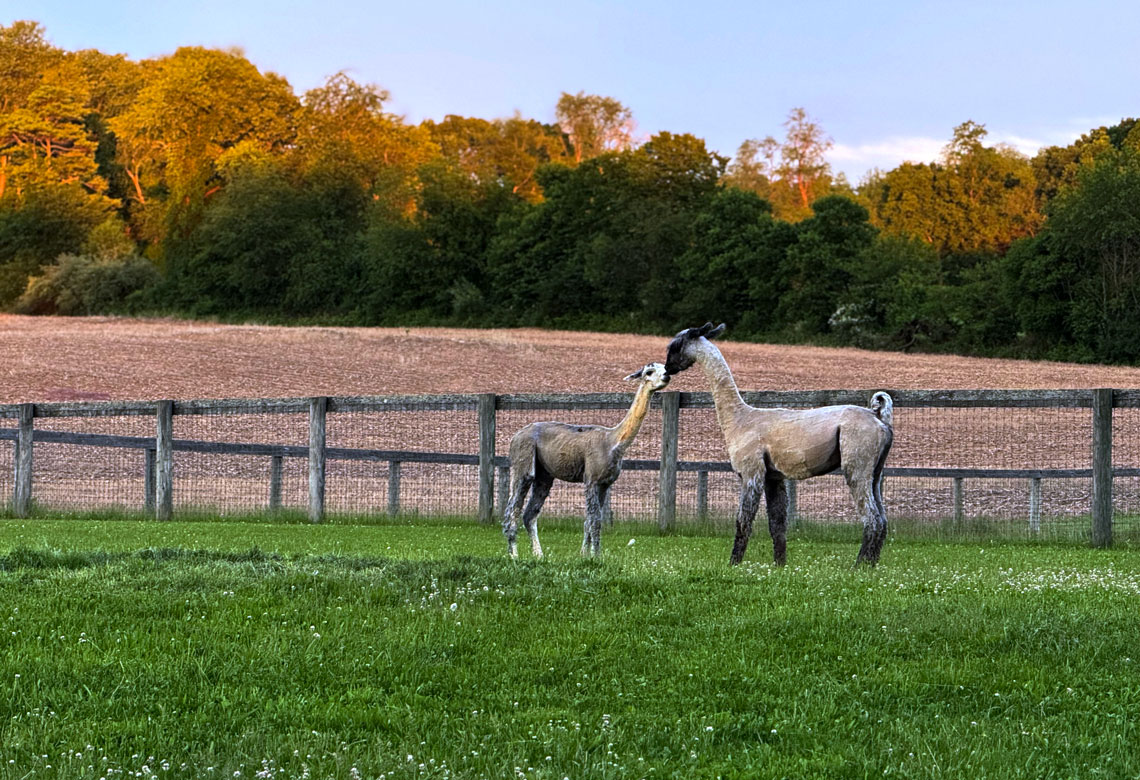
photo courtesty of Bent Pine Alpaca Farm
Pasture is one of the most important aspects of good care and management of alpacas and llamas. Proper layout and maintenance support animal health, simplify daily chores, and improve long-term farm sustainability.
How Many Alpacas Per Acre?
Stocking rate is the first decision in planning. Modern recommendations are more conservative than older rules of thumb:
- 4–6 alpacas per acre is reasonable on established, well-managed pasture.
- Higher densities are only possible with exceptional forage growth, irrigation, and strict rotational grazing.
In areas with seasonal growth, expect to supplement with hay for several months of the year.
Why Pasture Layout Matters
Thoughtful layout helps with efficiency, reduces labor, and keeps groups manageable:
- At least two pastures are needed (males and females).
- Three allows separating weanlings; four lets you divide male/female crias.
- Portable fencing is a cost-effective way to subdivide pastures for rotation.
Choosing the Right Forage Varieties
Forage selection depends on climate, soil type, and animal preference. Connect with your local Agricultural Service Agent for recommendations.
- Test soil twice a year
- Amend each pasture based on its own results
Topography matters: hills lose nutrients; lowlands accumulate them.
What We Plant at Our Alpaca Farm
- Primarily orchard grass
- Small percentage of alfalfa
- Avoid clover mixes—they choke out grasses
How We Improve Soil Organically
We use llama manure to improve sandy, clay-heavy soil:
- Spread manure thinly over targeted areas
- Disc it in
- Seed with oats, buckwheat, and alfalfa
- Let it grow 6–8 inches
- Disc again, rest 2 weeks
- Top-seed with orchard grass
This method has been highly successful for us.
Best Pasture Seed Mixes for Camelids
Use a mix of grasses and legumes. Legumes add protein and nitrogen to the soil.
Recommended species:
- Timothy
- Orchard grass
- Certain fescues
- Ladino (white) clover
- Alfalfa
Avoid rye grasses—they may cause staggers, a potentially fatal neurological condition. Even endophyte-free rye is not recommended.
If You Have the Wrong Forage
You may need to:
- Rake and overseed
- Plow and reseed completely
Don’t own equipment? Hire a local farmer—you’ll learn a lot from them, too.
Routine Pasture Maintenance
- Fertilize in spring and fall as needed.
- Lime soil if pH balance requires correction.
- Mow regularly—alpacas prefer forage under 6–8 inches.
- Rotate pastures to prevent overgrazing and reduce parasite loads.
Forage and Hay Analysis
Annual testing of forage and hay is essential to know protein, fiber, and Total Digestible Nutrients (TDN). In regions with mineral deficiencies (such as selenium), supplementation is necessary. Always request or perform hay tests before purchase and include agreements that allow returns if hay does not meet requirements.
Toxic Plants and Trees
Some plants can be fatal to alpacas and llamas. Well-fed adults often avoid them, but crias may chew indiscriminately. Fence off or remove hazardous species. Examples include:
- Yew
- Rhododendron and azalea
- Cherry (especially wilted leaves)
- Milkweed
- Maples (especially red maple)
- Oak (acorns and young leaves)
- Blue-green algae in stagnant water
Other ornamentals and weeds may also be harmful. Always confirm with a local agricultural agent or extension office for a region-specific list.
Final Thought
Pasture planning, forage testing, and careful observation remain the foundation of healthy, profitable herds. Use these general guidelines, but consult your local extension office or agricultural service for the most accurate advice based on your soil, forage species, and climate.